$5 Million Grant Supports Los Angeles Wildfire Home Rebuilding and Repairs
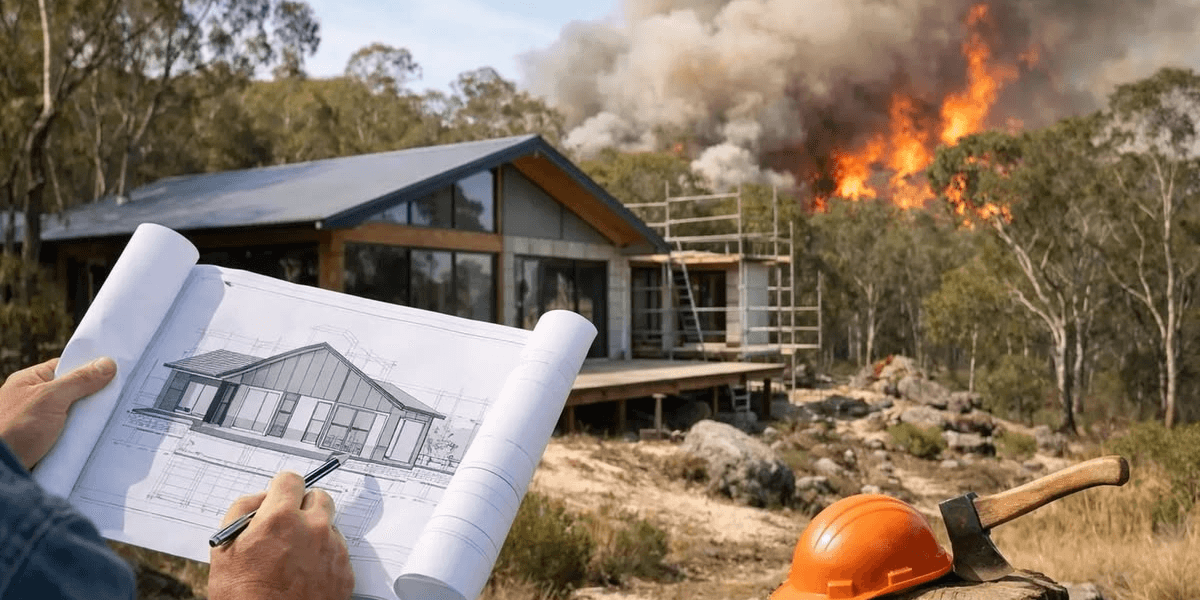
Habitat for Humanity of Greater Los Angeles received a $5 million grant from the American Red Cross to support rebuilding and repairs for residents whose homes were damaged by wildfires in Los Angeles County.
The funding announcement represents a significant private-sector and nonprofit investment in the region's continuing residential recovery effort and provides resources for homeowners facing the long process of repairing or rebuilding properties.
The grant is particularly relevant to Los Angeles because wildfire recovery has created housing challenges extending well beyond the immediate emergency response.
When homes are destroyed or damaged, residents can face temporary housing costs, insurance disputes, construction delays and difficulty finding contractors and materials.
Organizations working on recovery therefore play a role in restoring not only individual properties but also neighborhood housing capacity.
Habitat for Humanity of Greater Los Angeles has been involved in housing recovery efforts following major Southern California disasters.
The new funding allows the organization to expand that work while directing resources toward affected homeowners and communities.
The announcement comes as Los Angeles continues to address the longer-term consequences of destructive wildfires that damaged residential neighborhoods and displaced residents.
Rebuilding a house after a wildfire can take substantially longer than emergency cleanup.
Properties may require debris removal, structural assessments, permitting, architectural work, utility reconstruction and new construction before residents can return permanently.
In some cases, rebuilding also involves meeting updated building requirements intended to improve resilience against future fires.
That makes the recovery process both expensive and complicated.
The $5 million grant therefore has significance beyond its dollar value because it supports an organized rebuilding effort rather than simply providing emergency relief.
Habitat for Humanity's housing work typically involves partnerships with homeowners, volunteers, contractors, government agencies and other organizations.
Those relationships can help coordinate resources that individual households might struggle to manage independently.
The American Red Cross has also played a major role in disaster response and recovery across the region.
Its support for longer-term housing organizations reflects the reality that disaster recovery does not end when evacuation orders are lifted or emergency shelters close.
Housing is one of the most persistent needs after a major disaster.
For Los Angeles, that challenge is intensified by an already expensive housing market.
The region has long faced limited housing availability and high construction costs. Losing existing homes can add additional pressure by reducing the number of units available to residents.
Rebuilding damaged homes can therefore have a broader effect on neighborhood stability.
A restored home is not only a place for one household to live; it also contributes to the recovery of the surrounding community.
The grant is expected to help address those challenges by supporting repair and rebuilding activity.
The funding also demonstrates the importance of nonprofit organizations in disaster recovery.
Government agencies can provide emergency assistance, infrastructure support and regulatory coordination, while nonprofit groups often work directly with individual households.
Private donations and grants can help fill gaps between those systems.
For property owners, one of the most difficult aspects of wildfire recovery is navigating the transition from emergency response to permanent reconstruction.
The process may involve insurance claims, contractors, permits and financing.
Homeowners who lack sufficient resources can face especially long delays.
Programs that provide direct rebuilding support can shorten some of those barriers.
The Los Angeles announcement also highlights the broader importance of resilient housing.
Wildfire risk remains a significant consideration for communities across Southern California, particularly in areas where homes meet vegetation and mountainous terrain.
Reconstruction decisions can therefore influence how communities prepare for future fire seasons.
Building standards, defensible space, materials and neighborhood planning can all become part of the recovery process.
The $5 million commitment does not resolve those larger challenges, but it provides additional resources for households already affected by wildfire damage.
For the Los Angeles real-estate sector, the development is significant because disaster recovery directly affects housing supply, property values, construction demand and neighborhood stability.
The rebuilding effort also creates work for contractors and other professionals involved in residential construction.
The broader lesson is that housing recovery continues long after a wildfire is contained.
Homes must be repaired or replaced, infrastructure must be restored and displaced residents need pathways back into permanent housing.
The American Red Cross grant gives Habitat for Humanity of Greater Los Angeles additional capacity to participate in that process.
For affected communities, the most immediate significance is practical: more resources are becoming available to restore homes.
For the region's property market, the investment represents another step toward rebuilding residential capacity in neighborhoods that have experienced major wildfire disruption.

LA News Daily Contributor